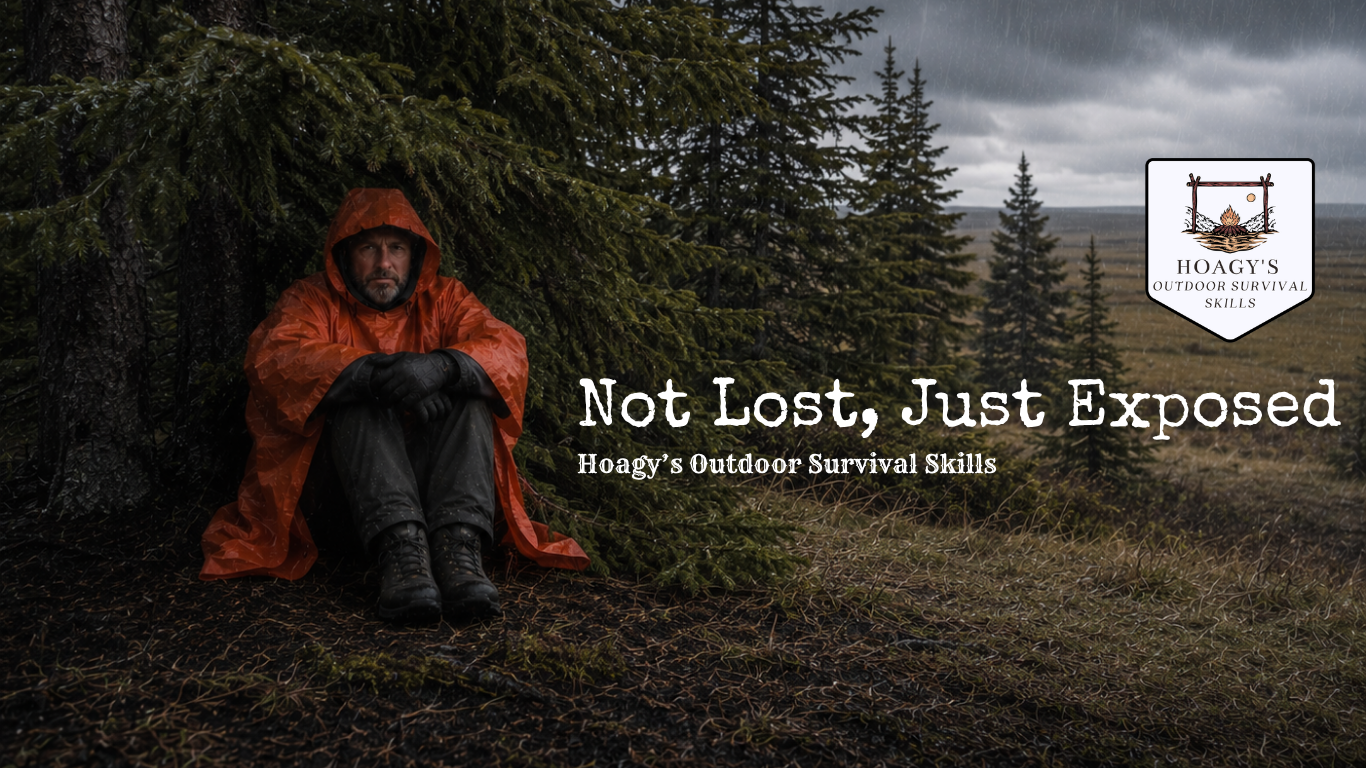
You don’t have to get lost to be in trouble.
When I sat down to write this month’s newsletter, the rain was falling outside once again. It has been a wet spring in my area of Saskatchewan, and even just a few days ago, on the first day of summer, severe weather brought periods of heavy rain and reports of funnel clouds in some areas.
Past summer memories remind us of warm temperatures, long days, and enjoyable time outdoors. What many people forget is that getting wet can still become a serious problem, even in June.
When we think of survival, fire often gets the spotlight. Fire provides warmth, dries clothing, boils water, and boosts morale. However, there are situations where shelter becomes the more urgent priority. I teach in the survival portion of every HOSS course that the human body has a narrow temperature range in which it operates efficiently. Variations outside of this range require a deliberate body-resource-management mindset to avoid the onset of hypothermia or hyperthermia, conditions caused by body temperatures that are too low or too high.
Imagine you are out hiking, berry picking, fishing, hunting, or simply exploring. The weather forecast looked fine when you left. Then the wind picks up. Dark clouds roll in. Heavy rain begins. Within an hour, you are soaked, temperatures begin to drop, and you realize you are farther from your vehicle than expected.
Often survival situations begin with a change in the weather, not a wrong turn.
In situations like this, the goal is not comfort. The goal is protection.
A survival shelter does not need to be elaborate. In fact, the best emergency shelters are often the simplest. A tarp strung between trees, a natural overhang, a dense stand of spruce trees, a contractor-sized garbage bag with a hole cut for your head, or even a poncho arranged to block wind and rain can dramatically reduce heat loss.
One of the biggest oversights people make is waiting too long to seek shelter. It is far easier to prevent heat loss than it is to replace heat once your body has already become cold. The moment you recognize deteriorating weather conditions, start thinking about shelter options before you desperately need them.
Staying warm requires far less effort than trying to warm up.
Many people picture a survival shelter as a complex lean-to built deep in the woods. In reality, the most important shelter decision is often recognizing the need for protection before you are cold, wet, and uncomfortable. A simple tarp erected early can be far more effective than an elaborate shelter built after your body has already lost significant heat. Alternatively, during the hot summer weather we all prefer, a tarp raised early as a sunshade can help keep you cool.
The best poor-weather shelter is not necessarily the most impressive one. It is the one that keeps you dry, blocks the wind, and helps preserve your body heat before conditions begin to take their toll.
When choosing a shelter location, consider these factors:
• Protection from wind and rain
• Avoidance of low spots where water may collect
• Dead or leaning trees that could fall during storms or high winds
• Access to materials if additional shelter construction is needed
• Visibility for rescuers if you become stranded
You do not need to carry a large amount of equipment to improve your odds. A lightweight tarp, emergency blanket, rain gear, and a few metres of cordage can provide tremendous shelter-building capability while adding very little weight to a pack.
At Hoagy’s Outdoor Survival Skills, we teach that survival is not about heroic actions. It is about making good decisions early. Recognizing the need for shelter before conditions become critical is one of those decisions.
As we move into summer and spend more time outdoors, take a moment to ask yourself: If the weather suddenly changed right now, what shelter options would I have?
The best shelter is the one you can build quickly, using the resources available to you, before the situation becomes an emergency.
So stay safe, stay prepared, and enjoy the outdoors.
Shelter Challenge
On your next outdoor outing, stop for five minutes and identify three potential emergency shelter locations within sight of where you are standing. The exercise costs nothing, takes very little time, and builds one of the most important survival habits: recognizing shelter opportunities before you need them.