
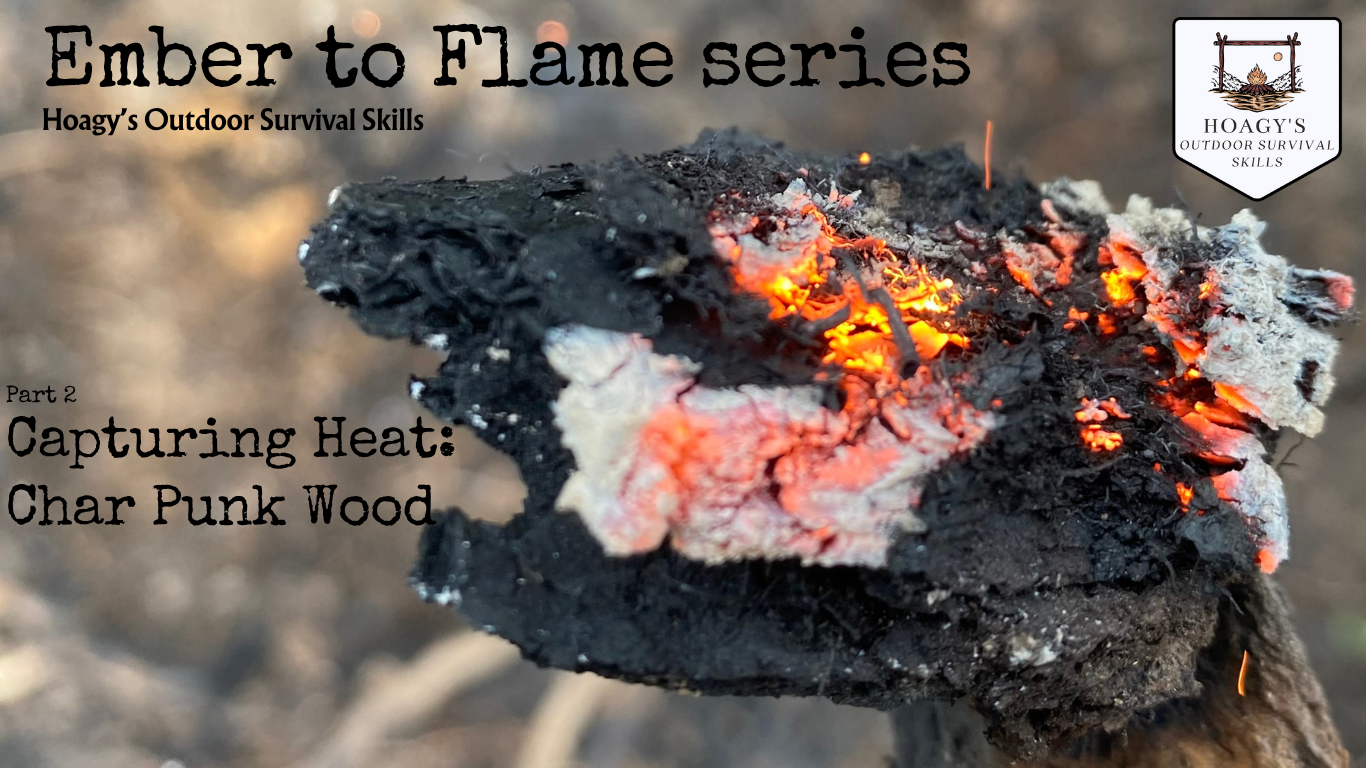
Capturing Heat: Char Punk Wood
Welcome back to Hoagy’s Ember to Flame series, focused on practical ways to create fire without matches or lighters. In this article, we move into the forest and look at a natural alternative that can often be found under our feet or in dead standing trees: punk wood.
Whereas char cloth, the first topic in the series, was made by charring natural fibres such as cotton shirts, linen sheets, or denim jeans, punk wood can also be transformed through pyrolysis using the same method to create char punk wood.
What Is Punk Wood
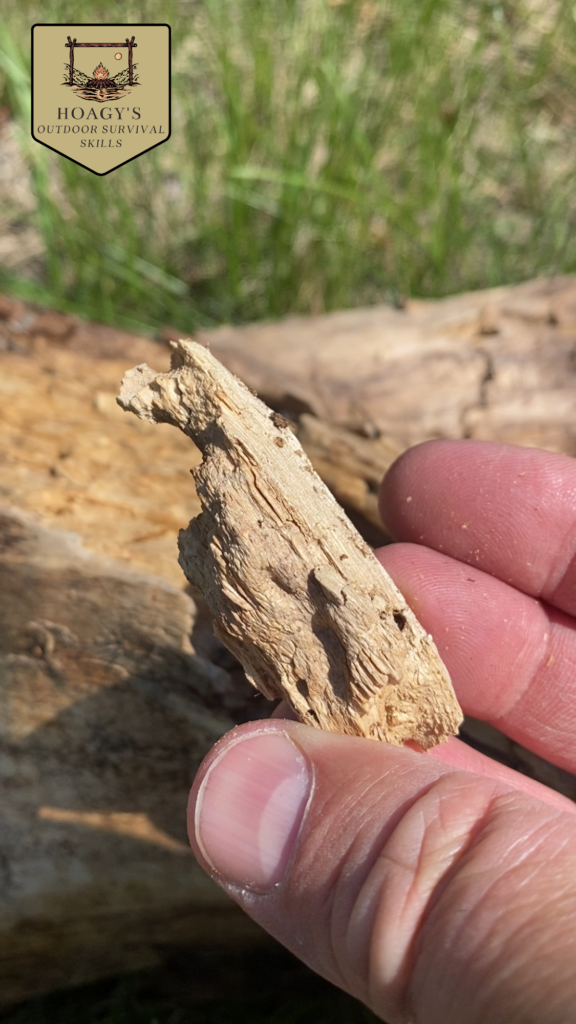
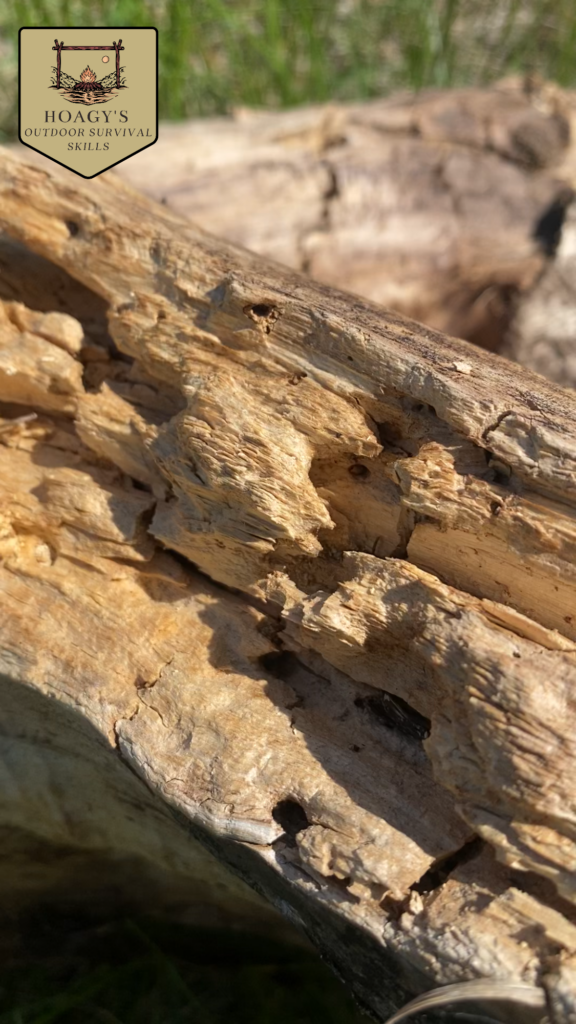
Punk wood is wood that has begun breaking down naturally as part of the decomposition process. Rather than being hard and dense like healthy wood, punk wood becomes soft, lightweight, and often spongy or crumbly.
Punk wood is not a species of wood. It is a condition of wood.
Not all rotten wood is useful for fire making. Good punk wood still holds together when handled and has a fibrous structure. Wood that crumbles completely into dust or is soaked with moisture will not perform well without serious effort.
When Nature Provides the Material
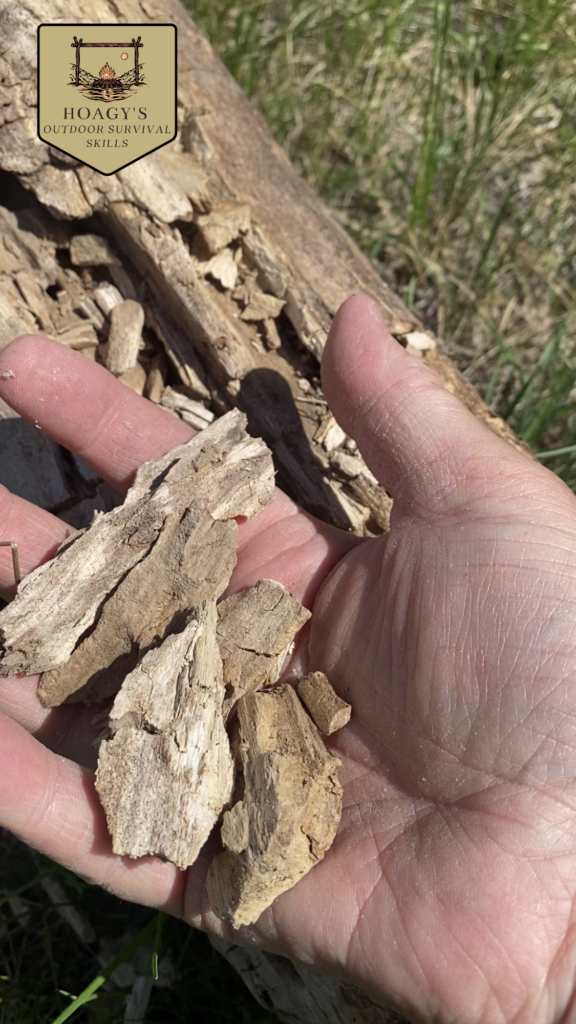
Punk wood itself is most easily found on the trunk of either fallen or dead standing trees. Its appearance may vary slightly among species, but the common characteristics I have found in Saskatchewan are the following:
Texture / Structure
Punk wood should be:
• Soft enough to press a fingernail into
• Spongy or cork-like
• Fibrous rather than powdery
• Easy to break apart by hand
If the punk wood crumbles into dust immediately, it is far too decomposed. Alternatively, if it still feels hard and dense like normal wood, it has not decomposed enough.
Colour
Before charring, and depending on tree species and stage of decay, punk wood often appears:
• Pale brown
• Light tan
• Yellowish
• Greyish
Colour on its own is not a reliable indicator. Learn to recognize suitable material through a combination of colour and texture.
Weight
Good punk wood is noticeably lighter than healthy wood from the same tree. As decomposition progresses:
• Density decreases
• Weight decreases
• Air spaces develop within the wood structure
This lighter weight helps punk wood accept and hold heat more readily than sound wood, even before it has been charred.
Whether your punk wood is sourced from spruce, poplar, birch, pine, or another species, what matters most is the stage of decomposition, dryness, and structure. Often the outside of a log is wet and decomposed while the interior contains excellent punk wood.
Pick up a piece and squeeze it between your fingers. Good punk wood should feel lightweight and slightly spongy. It should break apart with moderate pressure while still holding together as fibrous chunks rather than turning completely to powder. Any moisture being held within the punk wood can be removed over time through drying, or more quickly during the charring process.
Making Char Punk Wood
Just like char cloth, punk wood becomes very useful after being heated in a low oxygen environment through pyrolysis. The heating process removes combustible gases and leaves behind a carbon rich structure capable of catching a spark and maintaining a slow burn.
The result is often a larger and longer lasting ember than char cloth, although it generally takes more effort to create char punk wood simply because the material must first be sourced from the environment.
Making char punk wood is very similar to making char cloth. Readers who made char cloth following the instructions in the previous article will notice that the process for making char punk wood is nearly identical. The primary difference is that any moisture trapped within the punk wood must first evaporate before pyrolysis can begin. This often results in a slightly longer processing time, depending on the condition of the wood.
Equipment
• Metal tin (a small candy tin or Altoids-style tin works well)
• Hammer and thin nail (to create a few small vent holes in the lid)
• Heat source (fire, coals, or camp stove)
• Punk wood
Process
- Break or cut the punk wood into pieces that will fit loosely inside the tin.
- Close the lid.
- Place the tin in a fire or on hot coals.
After a short time, you may notice steam escaping from the vent holes if moisture is present in the wood. Once the wood has dried sufficiently, smoke and small flames will begin venting from the holes as the pyrolysis gases are released and burn off.
- Wait until smoke and flames stop coming from the vent holes
- Remove the container, flip it over to cover vent holes, and allow it to cool completely before opening.
If the container is opened while the punk wood is still hot, oxygen may enter and ignite the material, leaving you with ash instead of char punk wood.
Working with Char Punk Wood
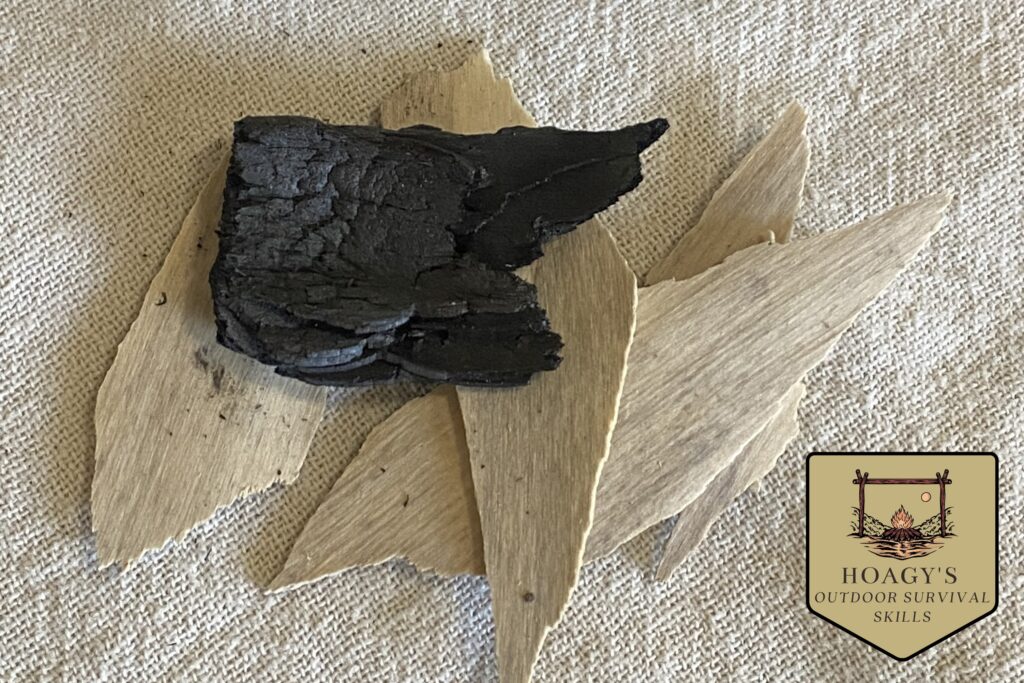
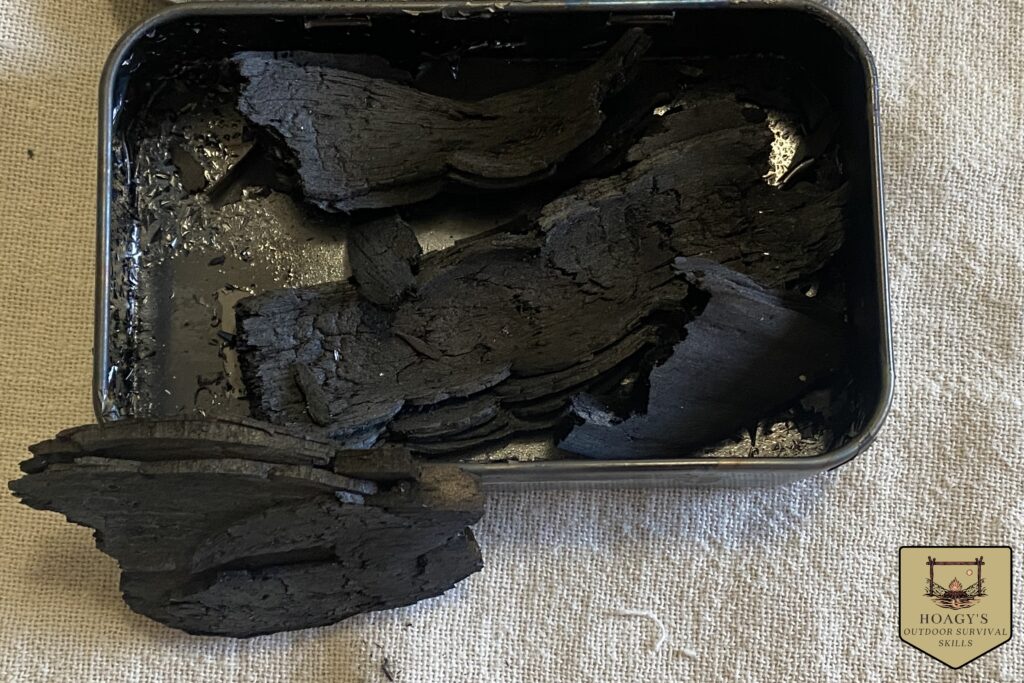
Much like char cloth, finished char punk wood is extremely light. Watch the wind, as it may blow it away. It has a matte black finish and generally holds its original shape, although it crushes easily.
Lighting char punk wood is almost instant. I recently posted a video to the Hoagy’s Outdoor Survival Skills Facebook page where I used a wallet size Fresnel lens, a small lightweight plastic magnifying lens, and within seconds of focusing sunlight onto a small piece, it was smoldering. (Watch the video HERE)
Building from Ember to Flame
Char punk wood is a very good source of heat, not flame, so it must be paired with suitable tinder materials. Tinder that works well with char punk wood includes dry grasses, birch bark strips, shredded inner bark (look for fallen trees with loose bark you can remove and process), and other fine wood shavings.
- Place a piece of char punk wood into your tinder bundle.
- Apply heat using a ferrocerium rod, flint and steel, solar concentration with a Fresnel lens, or an improvised lens. (Think about focusing sunlight through water contained in a small clear plastic bag or bottle.)
- Watch for a hot grey ash area (the ember) to develop.
- Wrap your tinder bundle around the char punk wood.
- Orient the bundle into a natural breeze, or add gentle and steady breaths.
- Allow the ember to burn and trap heat within your tinder materials. Heavy thick smoke may just mean that some of the bundle materials are releasing their moisture as heat increases.
- Once flaming, place the burning tinder bundle into your prepared fire lay.
Storing Your Char Punk Wood
Char punk wood should be kept as dry as possible. Moisture greatly reduces its ability to catch and sustain an ember, and damp material should be thoroughly dried before use. Unlike some natural tinder that can decompose rapidly when wet, char punk wood is not necessarily ruined by brief exposure to moisture, although its effectiveness will depend on how well it can be dried and how much of its structure remains intact.
Keeping char punk wood in a sealed plastic bag and adding a desiccant pack to absorb any moisture is an excellent method of storage.
Transporting Embers to a New Location
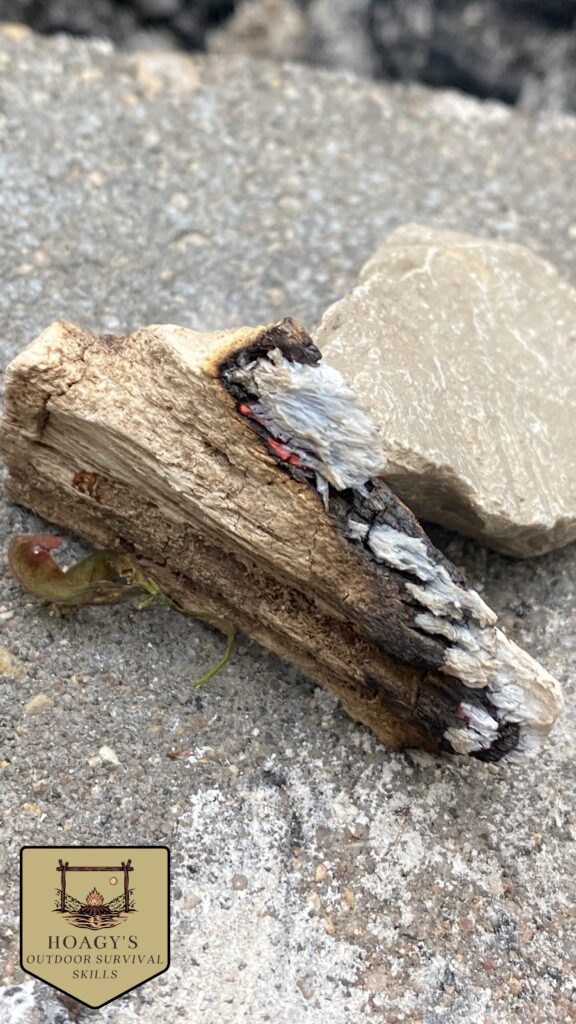
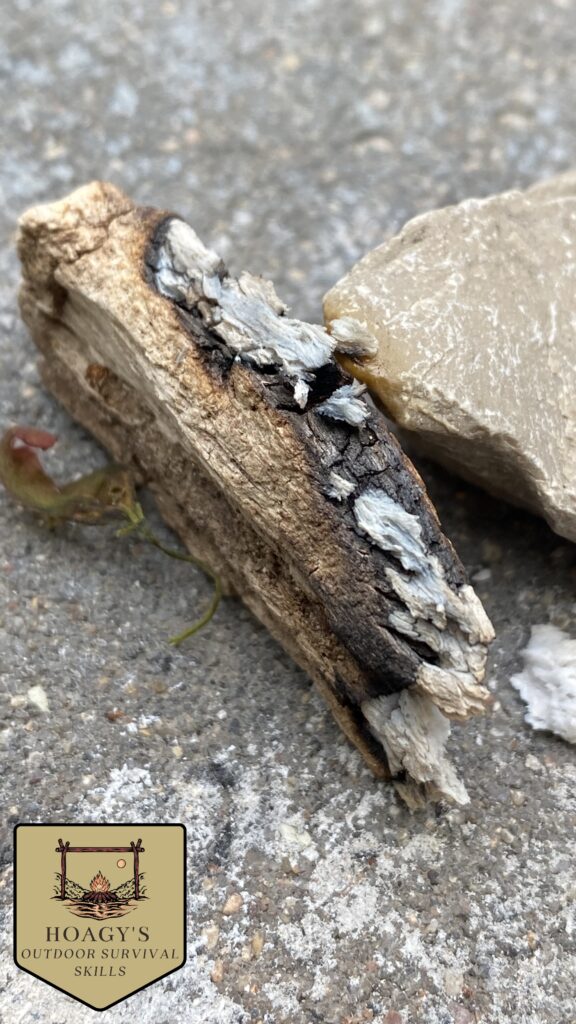
Many traditional fire-making cultures valued punk wood specifically because it could transport an ember over distance. Good punk wood that has not gone through a charring process will still smoulder slowly and hold heat for an extended period.
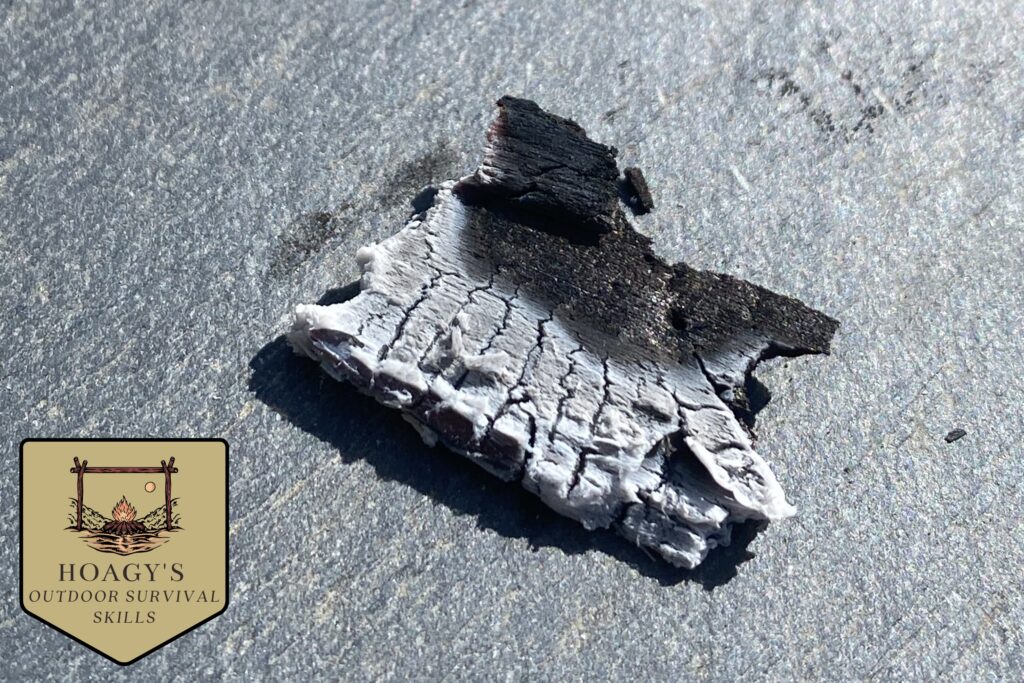
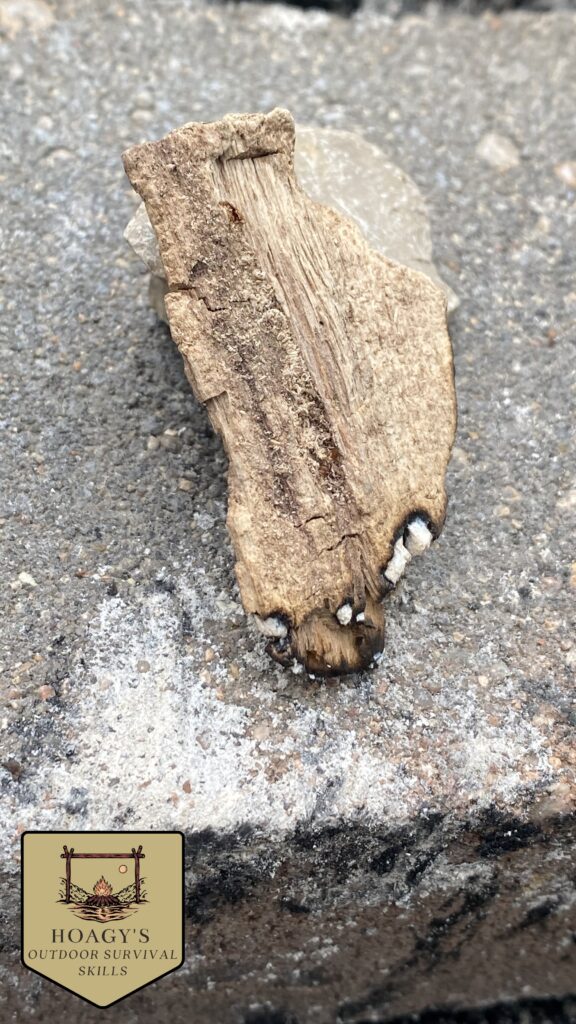
It does take more work to get non-charred punk wood to burn, but once lit, it can smoulder for a very long time. The pictures below were taken over a 15 minute period as I attempted to show how regular punk wood can maintain a slow, flameless burn.
Punk wood and char punk wood remind us that useful fire materials do not always need to come from a store shelf or from equipment packed into a pre-made kit. Sometimes the forest already provides what is needed. Understanding how to recognize, prepare, and use these materials adds another practical skill to your Ember to Flame toolbox.
The goal is not simply creating fire. The goal is understanding the process that captures the heat of a small ember and turns it into a useful flame. Someday, that may be all that you have.
So, wherever your next adventure or trip takes you, start training your eyes to recognize sources of punk wood and maybe even collect a little. Nature provides many resources to those who recognize them.