Choosing a Location
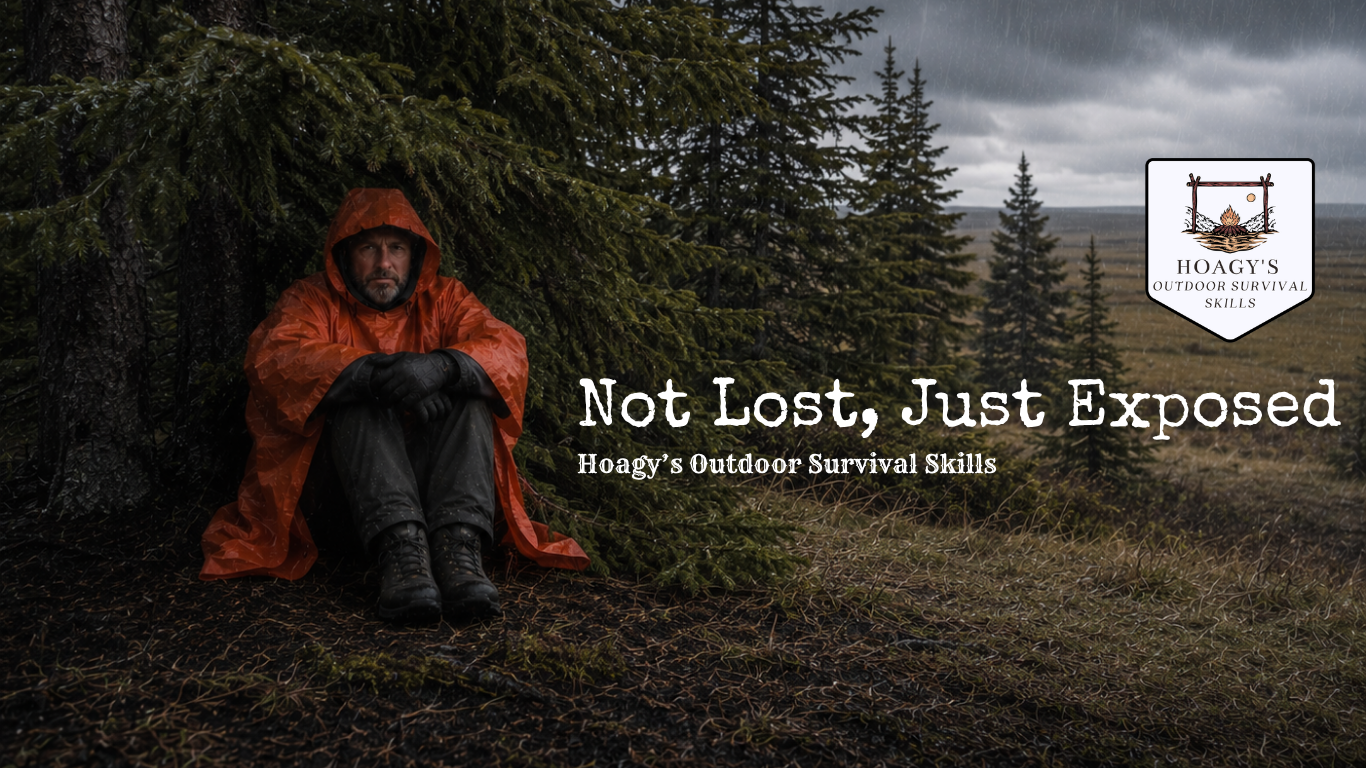
Shadows are getting longer. A weather system is blowing in. Foraging has left you tired and turned around. No one is expecting you for another hour.
By all intents and purposes, it looks as though you will be having an unexpected overnight.
This moment – right now – is a decision point, and it may carry serious consequences. Delaying the decision to stop, establish an impromptu shelter, and start a fire for warmth, light, and protection can leave you fumbling through brush and trees, increasing the risk of injury.
This key moment, when you realize your situation has shifted from expected to unexpected, needs to trigger the following mental response:
STOP.
If you’ve taken any outdoor training, this acronym may sound familiar.
S – Stop.
Halt your movement – sit if you’re able. At this stage, the goal is to avoid worsening disorientation or panic.
T – Think.
Assess your situation rationally. Shadows are getting longer; sunset is approaching. A weather system is blowing in – wind increases heat loss as it moves across the skin and may bring falling branches, precipitation, or rapid temperature changes. You’re tired, unsure of your direction, and it may be some time before anyone realizes you’re overdue.
O – Observe.
Look around. Evaluate your surroundings and available resources – both what you’re carrying and what’s present in the immediate area.
P – Plan.
Make a decision. Shelter first, then fire. Begin working through that plan deliberately.
In this newsletter, we’ll focus on the thought process behind choosing a suitable location for an emergency shelter.
In the Hoagy’s Outdoor Survival Skills Shelter course, we teach five key considerations when selecting a site – often referred to as the 5 W’s:
1. WATER
Rain flows from high ground to low, and moisture often collects in depressions where cold air also pools. Avoid low spots and look for slightly elevated terrain. Be mindful that water also drips from the outer edge of tree canopies.
Access to drinking water matters, but so does distance. Because animals frequent water sources, choose a shelter location 100–200 feet away from lakes, rivers, or streams.
2. WIND
Wind accelerates heat loss through convection, especially when clothing or skin is wet. Selecting a location with natural windbreaks – dense trees, hillsides, or rock outcrops – reduces both exposure and workload.
Tarps are effective wind barriers, but remember that wind direction can change overnight. In Saskatchewan, this shift is typically within 20 – 60 degrees of the evening wind direction.
3. WIDOWMAKERS
“Widowmaker” is a slang term, originating in the logging industry, used to describe overhead hazards capable of causing sudden injury or death. When selecting a shelter location, lift your eyes from the ground and carefully scan the area above and around you.
Look for dead, leaning, or rotting trees, trees under heavy snow load, as well as broken or tangled branches (often called snags). In the scenario outlined at the start, we know a windy weather system is approaching, so selecting an area with minimal overhead hazards is critical.
4. WOOD
Consider the availability of wood nearby. Wood may be needed for shelter construction, fire, or both. Limited supply may dictate fuel-efficient fire lays.
Choosing a site near fallen branches, small standing deadwood, leaf litter, or spruce boughs saves time and energy – especially when daylight is fading.
5. WILDLIFE
From four legs to four hundred, avoid setting up where others already live. Stay clear of animal trails, feeding areas, and watering points (again, 100–200 feet from water).
Animals don’t expect humans on their travel corridors. Depending on wind direction, you may surprise them at close range, resulting in their loud, panicked movement away through the brush.
Don’t forget what’s underfoot. Trample tall grass and check for insects such as ants, ticks, spiders, or other ground nests before committing to a location.
Intentional thought about shelter locations while outdoors strengthens decision-making when it matters most.
Quick Location Checklist:
☐ Scout at least 2–3 potential sites before committing
☐ Assess threats first (widowmakers, water flow, wildlife signs) to eliminate unsafe areas
☐ Natural wind protection and proper drainage
☐ Confirm access to nearby resources (wood, debris materials, water)
☐ Start early – ideally mid-afternoon – to finish before dark
Once a location is chosen, shelter construction must be kept within limits of your physical ability, remaining energy, available daylight, and environmental conditions.
Shelter setup times vary widely from a quick emergency setup to an insulated build for better protection against cold/rain.:
- 10–30 minutes: Very quick improvised shelters (minimal effort using tarps, ponchos or natural features). Speed prioritized over comfort.
- 1–2 hours: Basic natural-material shelters such as a branch lean-to or a sloped A-frame for short-term overnight protection.
- 2–4+ hours: Insulated debris or leaf huts. Low profile and highly effective for warmth even without fire but extremely time and energy intensive due to the need for thick insulation layers (3+ feet).
Unexpected overnights are rarely the result of a single mistake – they’re usually the result of small decisions delayed or overlooked as conditions change. By recognizing decision points early and understanding how to choose a safe shelter location, you give yourself time, options, and a far better chance of a positive outcome. Calm thinking, timely decisions, and awareness of fundamentals turn uncertainty into control – and help make an unexpected overnight a manageable, even safe, experience.
Don’t wait for the unexpected.
Train with Hoagy’s Outdoor Survival Skills to learn how to choose safe shelter locations, start fires, and stay prepared outdoors.